
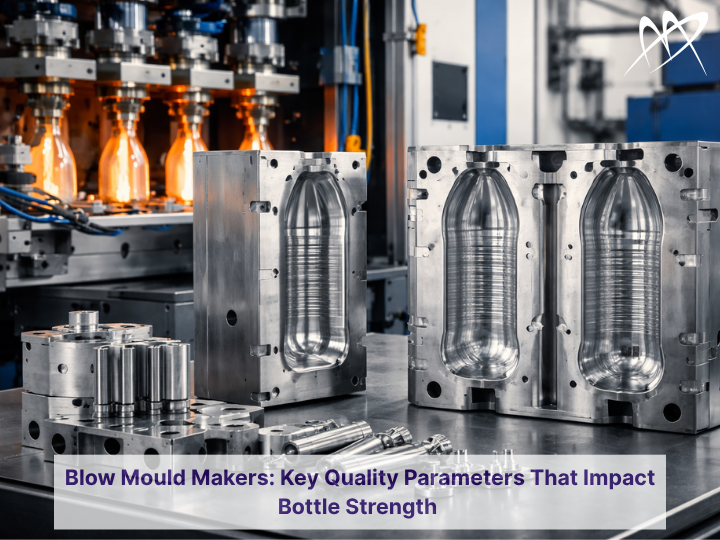
In today’s competitive packaging industry, the quality of plastic bottles directly impacts product safety, transportation efficiency, and overall brand perception. Whether used in food and beverages, pharmaceuticals, chemicals, or personal care, bottles must be strong enough to withstand pressure, handling, and varying environmental conditions.
This is where experienced blow mould makers play a crucial role. While many businesses focus primarily on raw materials, bottle strength is largely influenced by the precision of mould design, engineering accuracy, and manufacturing quality. A well-designed mould ensures consistent production, improved durability, and minimal defects. Dowell Moulds specializes in precision-engineered mould solutions that help manufacturers achieve reliable and high-performance packaging.
Why Bottle Strength Matters in Modern Packaging
Packaging today does more than just contain a product it protects it throughout its entire journey. From filling lines to storage, transportation, and retail shelves, bottles are exposed to multiple stress points.
If the bottle lacks sufficient strength, it can result in:
-
Leakage during transit
-
Deformation under stacking pressure
-
Breakage during handling
-
Increased returns and operational losses
On the other hand, strong bottles help maintain product integrity, reduce wastage, and improve customer satisfaction. This is why businesses rely on skilled blow mould makers to deliver moulds that produce durable and consistent packaging.
Key Factors That Impact Bottle Strength
1. Precision in Mould Design
The strength of a bottle starts with its design. Even minor inaccuracies in mould design can lead to uneven material distribution, creating weak zones that may fail under pressure.
Experienced blow mould makers focus on:
-
Optimized bottle geometry for balanced load distribution
-
Reinforced base and neck areas
-
Accurate cavity dimensions
A precise mould design ensures uniform thickness and structural stability, which directly improves bottle strength.
2. Quality of Mould Materials
The material used to manufacture the mould significantly affects its performance and lifespan. High-quality mould makers typically use hardened steel or advanced alloys to ensure durability.
Key advantages include:
-
Longer mould life
-
Consistent production quality
-
Improved surface finish
Using reliable materials ensures that the mould performs consistently even in high-volume production environments.
3. Surface Finish and Polishing
Surface finish is a critical yet often underestimated factor in bottle manufacturing.
A well-polished mould surface:
-
Enables smooth flow of plastic material
-
Reduces friction during expansion
-
Minimizes the risk of micro-defects
Poor surface finishing can lead to imperfections that weaken the bottle over time. This is why skilled blow mould makers pay close attention to polishing and finishing processes.
4. Efficient Cooling System
Cooling plays a vital role in determining the final shape and strength of the bottle. Uneven cooling can cause defects such as warping, shrinkage, or structural inconsistencies.
Advanced cooling systems are designed to:
-
Ensure uniform solidification of the material
-
Maintain dimensional accuracy
-
Improve production efficiency
Proper cooling not only enhances bottle strength but also contributes to faster production cycles.
5. Uniform Wall Thickness Distribution
Consistent wall thickness is essential for maintaining strength across the entire bottle. Uneven thickness can create weak points that are more susceptible to damage.
Critical areas include:
-
Bottle base (load-bearing section)
-
Shoulder and neck regions
-
Side walls
Professional blow mould makers optimize mould design to ensure even material distribution, improving resistance to pressure and impact.
6. Proper Venting System
During the blow moulding process, trapped air inside the mould can lead to defects if not properly managed.
A well-designed venting system:
-
Allows air to escape efficiently
-
Prevents formation of bubbles and voids
-
Ensures complete filling of the mould cavity
Although it may seem like a minor detail, proper venting plays a significant role in maintaining structural integrity.
7. Compatibility with the Manufacturing Process
Different blow moulding methods require specific mould configurations. For example, extrusion blow moulding and injection-based processes have different design requirements.
When the mould is aligned with the production process:
-
Material flow becomes more consistent
-
Defects are minimized
-
Overall product quality improves
Experienced blow mould makers ensure that the mould design matches the chosen manufacturing process for optimal results.
8. Quality Testing and Inspection
Reliable mould makers follow strict quality control practices to ensure consistent performance.
Common testing methods include:
-
Dimensional accuracy checks
-
Pressure and load testing
-
Drop and impact testing
These tests help confirm that the bottles can withstand real-world conditions, reducing the risk of failure during use.
Choosing the Right Blow Mould Makers
Selecting the right mould maker is a key decision that can directly affect product quality and operational efficiency.
Here are some important factors to consider:
-
Industry experience and proven expertise
-
Use of advanced technologies such as CAD/CAM and CNC machining
-
Ability to provide customized solutions
-
Strong quality assurance processes
-
Reliable technical support and after-sales service
A dependable mould maker acts as a long-term partner, helping businesses improve consistency and reduce production challenges.
The Role of Innovation in Bottle Strength
The blow moulding industry continues to evolve with the introduction of advanced technologies. Modern blow mould makers are leveraging these innovations to improve accuracy and efficiency.
Some notable advancements include:
-
Simulation software for optimizing mould design before production
-
Automation for improved precision and repeatability
-
High-precision machining for better tolerances
These innovations make it possible to produce lightweight bottles without compromising strength, helping manufacturers reduce material usage while maintaining performance.
Conclusion
Bottle strength is not determined by a single factor but by a combination of design precision, material quality, process control, and testing standards. Each stage of mould development contributes to the final performance of the bottle.
By working with experienced blow mould makers, businesses can ensure consistent quality, reduce defects, and improve overall production efficiency. Strong and reliable packaging not only protects the product but also enhances customer trust and brand value.
Get in Touch with Dowell Moulds
-
Request a Free Quote: Ensure your caps are leak-proof, durable, and high-quality.
-
Call Us Directly: +91 9825107634 / +91 7874123000
-
Email Us: info@dowellmoulds.com
-
Visit Our Website: www.dowellmoulds.com for more information
-
Expert Consultation: Get guidance on custom compression closure moulds tailored to your product needs