
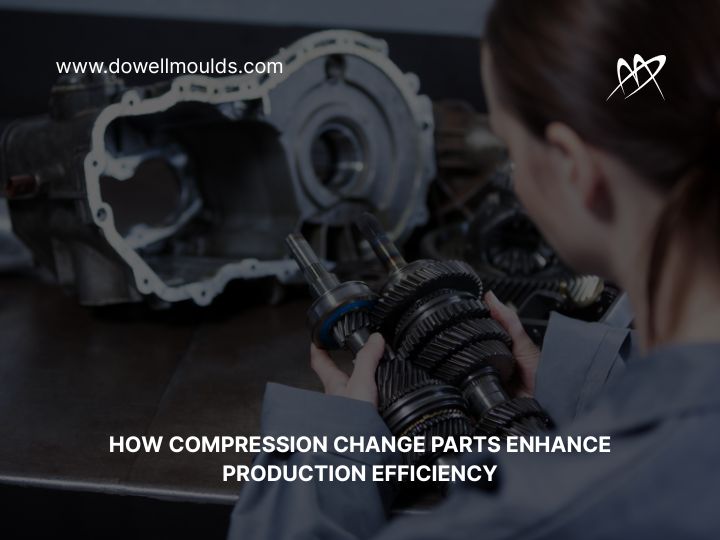
Production efficiency is crucial to commercial success in the highly competitive manufacturing industry. A critical aspect often ignored is compression change components' significance in enhancing production efficiency. The components, created to maximize the performance of equipment used in production, could dramatically reduce downtime, improve throughput and enhance product quality. If you know how compression change components work and the benefits they bring, companies can make better-informed choices that lead to improved general operations.
What Are Compression Change Parts?
Compression change components are parts used in various manufacturing processes like packaging, injection moulding, and food production. They help to adjust the machine's dimensions, shape, form, or configuration to satisfy specific requirements for production. They allow rapid modifications to the machinery without lengthy downtime or expensive overhauls.
Compression change components are available in various designs based on the equipment they're designed for. Their ability to adapt is one of the reasons that they are extensively used in fields such as food processing, pharmaceuticals, and plastic manufacturing. For example, changing parts of packaging machines is vital for adapting the machine to accommodate different sizes of packages or types as well as other materials.
Benefits of Compression Change Parts
-
Reduced Downtime
One of the most significant benefits of using compression-change parts is the time savings. Traditional machine setups can be time-consuming, taking hours or even days to set up, especially if large-scale parts replacement or adjustments are needed. Compression change components are made to be quick-changeable, allowing people to modify their machine's configuration in just a few minutes.
The reduction in time to set up ensures that manufacturers have an uninterrupted production flow with no unnecessary interruptions, eventually increasing production. This could lead to substantial gains in the overall efficiency of the high-speed production lines.
-
Improved Product Quality
Compression change components are precisely engineered to comply with particular manufacturing standards. This ensures that the final product is in line with the requirements of specifications. They can aid in maintaining the same temperature, pressure and other parameters essential for manufacturing quality control.
For example, in the pharmaceutical sector, compression change components are crucial to ensure that the dosage and formula are correct. In the food industry, the components can also be used to ensure the seal of packaging by preventing leaks and ensuring that the product is kept safely.
-
Cost efficiency
Investing in the compression parts could yield savings in the future. The manufacturers can reduce operational expenses by reducing the requirement to perform extensive overhauls of machines and labour-intensive adjustments to the equipment. In addition, these products are made to last, which reduces the need for frequent maintenance and replacements.
Switching between configurations for production without changing whole systems means companies can manage a broader range of items, create new markets, and grow revenue streams.
-
Enhanced Flexibility
It is vital for today's highly competitive manufacturing. Compression change pieces allow companies to swiftly adapt to changing production demands. If a company must switch to a different product line or deal with different types of materials, These parts offer the ability to handle these adjustments seamlessly.
It also enhances an organization's capacity to adapt to changes in demand. For instance, if the manufacturer has to change to a new packaging type and change parts for compression, they can easily switch to different configurations with minimal delay.
-
Lower Maintenance
Costs and the precision of the change parts for compression reduce wear and tear on the production equipment. Better monitoring of the machine's configurations and settings makes it easier on the machine, leading to fewer breakdowns and, consequently, reduced maintenance costs. In turn, companies can concentrate on executing their business efficiently without worrying about regular maintenance requirements.
Companies can operate the production line at maximum capacity with more efficient throughput and compression components. Speedier changeovers, reduced time to repair, and enhanced production efficiency result in a more efficient overall production rate. When it comes to industries in which timing is critical, such as electronics or food manufacturing, increasing throughput is a way to gain an advantage.
-
Higher throughput
The higher production and good throughput implies that more items are produced simultaneously, resulting in higher revenue for a company and decreased unit expenses. Compression change components are crucial in manufacturing industries like automotive, where production volume directly correlates to profitability.
Real-World Applications
For a better understanding of the effect of compression on components, let's take a look at some examples from the real world:
-
Pharmaceutical Industry: Maintaining exact measurements and specifications for products is essential. Changing parts for compression help ensure that tablets, capsules or syrups manufactured conform to the standards required in formulation and dosage. The components also facilitate fast reconfiguration of the equipment while changing between various items.
-
Packaging Industry: Packaging lines, especially those for the food and beverages sector, usually require frequent adjustments to accommodate different formats, sizes, shapes, and other materials. Compression change components help make the process quicker and more efficient, decreasing the time needed for manual adjustments and increasing manufacturing line productivity.
-
The process of plastic injection moulding: When injection moulding is done, the accuracy of the moulds is essential in creating top-quality plastic products. Compression change parts allow the manufacturer to alter the set-up of their moulds rapidly and effectively, enhancing quality and consistency while reducing waste.
How to Choose the Right Compression Change Parts
Selecting the appropriate components for your compression operation is based on a variety of aspects :
-
Compatible: Make sure that the components you choose to use can be used with the machinery you have and meet the needs of the production procedure.
-
Material Qualitative: Choose to purchase change parts made of robust materials that can meet your workplace's demands and conditions.
-
Modification: If you need special adjustments, you should look for parts with change options that can be customized to suit your needs.
-
Provider Reliability Rely with reliable suppliers who supply high-quality parts for change and support customers in repairs and maintenance.
Conclusion
Compression change parts are essential for increasing production efficiency within diverse sectors. They reduce downtime and improve product quality, and the flexibility allows manufacturers to stay ahead of the changing demands of markets while increasing production. Investing in the highest-quality compression components can result in long-term price savings, enhanced throughput and more secure processes, ultimately contributing to the development and longevity of companies in the manufacturing industry.
In today's highly competitive manufacturing industry, implementing these components is not only an option; it's essential for remaining competitive and ensuring an efficient operation.