
The performance of a plastic bottle begins long before blow molding — it starts with the pet preform mould. If the mould design, processing parameters, or material handling are even slightly off, defects can appear in the preform and later multiply during bottle formation.
For manufacturers producing beverage bottles, pharmaceutical containers, edible oil packaging, or personal care products, preform quality is non-negotiable. Even minor defects can lead to leakage, structural weakness, haze, rejection rates, and financial losses.
This guide explores the most common PET preform mould defects, their root causes, and how expert mould makers prevent them through precision engineering, advanced tooling, and strict quality control.
What Is a PET Preform Mould?
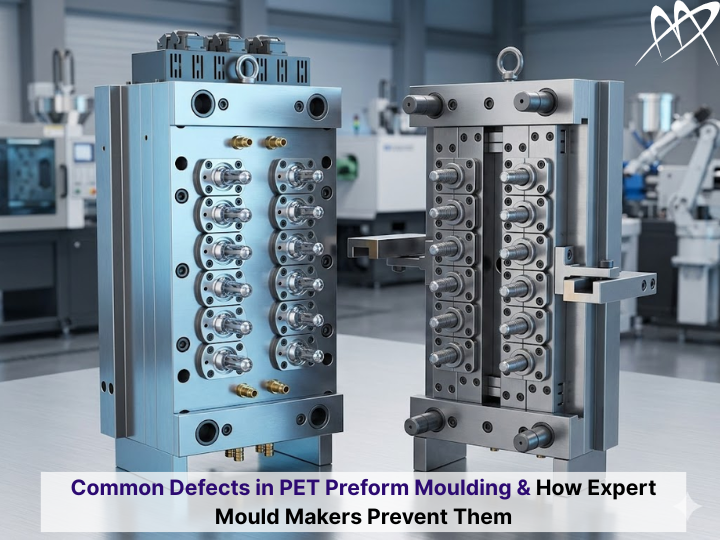
A PET preform mould is a precision injection mould used to manufacture PET (Polyethylene Terephthalate) preforms — the small, test-tube-shaped components later reheated and stretch-blown into bottles.
These moulds typically include:
- Multi-cavity systems (24, 48, 72, 96 cavities or more)
- Hot runner systems for uniform melt distribution
- Precision cooling channels
- Hardened tool steel components
- Accurate gate design
Because PET is sensitive to temperature, moisture, and pressure variations, the mould must be engineered for consistent heat transfer and dimensional stability.
Why Defect Prevention Starts with the Mould
Many manufacturers assume defects occur due to machine issues. In reality, mould design and precision machining play a critical role.
A poorly designed pet preform mould can cause:
- Uneven wall thickness
- Flow marks
- Air bubbles
- Short shots
- Flash formation
- Gate whitening
- Warpage
Expert mould makers focus on preventive design rather than reactive troubleshooting.
1. Short Shot in PET Preforms
What It Is
A short shot happens when the molten PET material fails to fully fill the entire mould cavity during the injection process. This results in an incomplete or partially formed part, often showing missing sections, thin areas, or irregular edges. It usually occurs due to insufficient injection pressure, low material temperature, poor venting, or restricted flow inside the mould. Short shots can affect the strength, appearance, and overall quality of the final product, making proper process control super important for consistent production.
Causes
- Insufficient injection pressure
- Improper gate design
- Low melt temperature
- Blocked hot runner system
- Poor venting
How Expert Mould Makers Prevent It
- Optimized gate size and geometry
- Balanced hot runner systems
- Proper cavity venting
- Simulation-based mould flow analysis
- Precision polishing to reduce resistance
Using advanced mould flow software during the design phase significantly reduces short shot risks.
2. Flash Formation
What It Is
Flash is a thin layer of unwanted excess plastic that forms along the parting line of a moulded part, where the two halves of the mould meet. It happens when molten material escapes through small gaps between the mould sections during injection or blow moulding. This extra plastic creates a rough edge or seam that often needs trimming or finishing to achieve a clean, precise final product.
Causes
- Worn parting surfaces
- Excess injection pressure
- Improper clamping force
- Poor mould alignment
Prevention Strategies
- High-hardness tool steel for durability
- Tight machining tolerances
- Precision alignment systems
- Regular maintenance schedules
- Balanced injection pressure settings
A high-quality pet preform mould manufacturer ensures micron-level tolerances to eliminate flash issues.
3. Bubbles and Air Traps
What It Is
Small air pockets trapped inside the preform are known as internal voids or bubbles. These form when air or gases become trapped in the molten PET during injection and fail to escape before the material solidifies. Poor venting, low injection pressure, high moisture content, or improper temperature control can all contribute to this issue.
These trapped air pockets weaken the structure of the preform, reduce clarity, and may cause defects during the blow molding stage, ultimately affecting the strength and overall quality of the final bottle.
Causes
- Moisture in PET resin
- Inadequate drying
- Poor venting design
- Rapid injection speed
How Experts Solve It
- Proper resin drying (moisture below 50 ppm)
- Venting channels in mould cavities
- Controlled injection speed
- Balanced temperature control
Air venting design is often overlooked, but it is critical for defect-free PET preforms.
4. Uneven Wall Thickness
Why It Matters
Uneven walls can cause bottle failure during stretch blow molding.
Causes
- Off-center gating
- Inconsistent cooling
- Poor cavity design
- Uneven material flow
Prevention by Expert Mould Makers
- Symmetrical cavity layout
- Precision cooling channel design
- Uniform heat distribution
- High-quality hot runner systems
5. Gate Whitening or Stress Marks
What It Is
White stress marks near the gate area are visible whitening or hazy lines that appear around the point where molten plastic enters the mould cavity. These marks are usually caused by high injection pressure, rapid cooling, or excessive mechanical stress concentrated at the gate during filling and packing. The stress changes the internal structure of the material, making the surface look white or frosted. While they may not always affect functionality, they can weaken the part over time and reduce its visual quality, especially in transparent PET products.
Causes
- Excessive injection pressure
- Rapid cooling
- Poor gate design
- Material degradation
Prevention
- Optimized gate geometry
- Temperature-controlled mould plates
- Balanced injection parameters
- High-grade runner system design
6. Black Specks & Contamination
These defects are usually caused by material degradation, burnt resin, dust, improper cleaning of the machine, or contamination in raw PET material. High processing temperatures and poor maintenance can also contribute to the issue. Black specks affect the appearance, clarity, and overall quality of the product, especially in transparent items, making proper material handling and equipment cleaning essential for defect-free production.
Causes
- Resin contamination
- Degraded PET
- Residue in barrel or mould
- Poor material handling
Prevention
- Strict resin quality control
- Clean mould maintenance
- Proper filtration systems
- Controlled processing environment
The Role of Precision Engineering in PET Preform Mould Quality
High-performance moulds require:
- CNC machining with tight tolerances
- Mirror polishing for smooth cavity surfaces
- Advanced hot runner technology
- Balanced cooling circuits
- Hardened stainless steel components
A reliable pet preform mould manufacturer integrates all these elements into a single engineered solution.
Best Practices to Prevent PET Preform Defects
Manufacturers should:
- Dry PET resin properly before processing
- Maintain consistent injection pressure
- Optimize cooling time
- Conduct regular mould inspection
- Use high-quality hot runner systems
- Train machine operators
Why Choosing the Right PET Preform Mould Partner Matters
Selecting the right mould maker impacts:
- Production efficiency
- Rejection rates
- Energy consumption
- Cycle time
- Long-term maintenance costs
About Dowell Moulds
Dowell Moulds is a trusted name in precision pet preform mould manufacturing, delivering advanced tooling solutions for global packaging industries.
With a focus on:
- High-cavity mould systems
- Precision engineering
- Durable tool steel
- Optimized cooling and hot runner systems
- Strict quality control
Dowell Moulds helps manufacturers reduce defects, improve output, and maintain consistent product quality.
Website: https://www.dowellmoulds.com/
Contact: +91 9825107634 / +91 7874123000
Email: info@dowellmoulds.com