
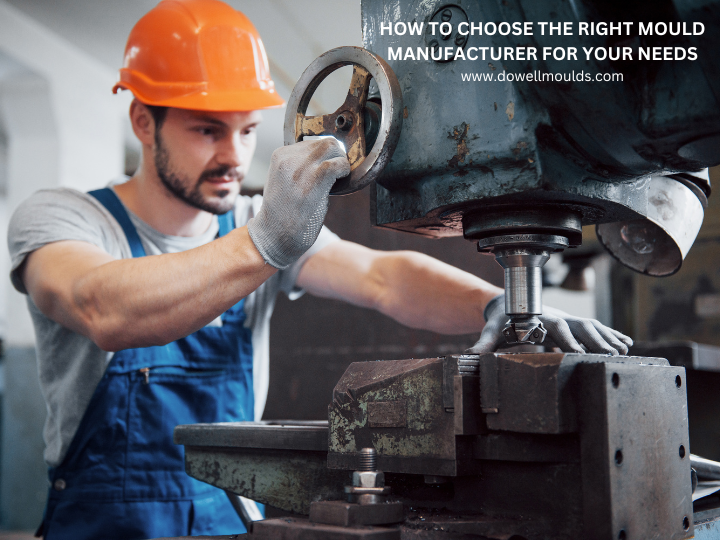
When it comes to product manufacturing, choosing the right mould manufacturer is one of the most critical decisions you’ll make. The right partner ensures precision, durability, and efficiency, while the wrong one can lead to costly delays, poor-quality parts, and wasted investment. Whether you need plastic injection moulds, die casting moulds, or custom tooling, this guide will help you select the best manufacturer for your specific needs.
Understand Your Moulding Requirements
Before reaching out to potential suppliers, define your requirements clearly.
Ask yourself:
-
What type of mould do you need — injection, blow, compression, or die-casting?
-
What material should the mould be made from — steel, aluminum, or another metal?
-
How many parts do you plan to produce (low volume or mass production)?
-
What level of precision and tolerance is required?
A clear understanding of your project helps the mould manufacturer provide accurate quotes and technical guidance.
Pro Tip: Share detailed 3D drawings and CAD files with manufacturers to get a more precise assessment.
Check the Manufacturer’s Technical Capabilities
Not all mould makers have the same technical capacity. You should ensure that your chosen mould manufacturing company has:
-
Advanced CNC machines, EDM tools, and mould flow analysis software
-
Skilled engineers with design and tool-making experience
-
A track record of handling complex and high-precision projects
-
Capability to produce moulds of different sizes and materials
Modern technology and experienced staff are essential for delivering accurate and long-lasting moulds.
Evaluate Experience and Industry Expertise
Experience is a key factor in mould making. A manufacturer with years of experience understands design challenges, production efficiency, and common pitfalls.
Look for:
-
Number of years in business
-
Industries served (automotive, electronics, packaging, medical, etc.)
-
Case studies or client testimonial
Verify Quality Control and Certifications
Quality is non-negotiable in mould manufacturing. Make sure your supplier follows strict quality assurance protocols such as:
-
ISO 9001 or equivalent certification
-
CMM inspection reports and testing
-
Mould trial and sample approval process
-
Regular maintenance and performance tracking
High-quality moulds ensure consistent production, reduce defects, and extend tool life.
Compare Pricing and Value
While cost is always a consideration, the cheapest option isn’t always the best. Instead of focusing solely on price, look at total value:
-
Tool life expectancy
-
Efficiency and cycle time
-
After-sales support
Assess Communication and Support
A reliable mould manufacturer should be responsive, transparent, and proactive. Clear communication helps prevent misunderstandings and production delays.
Look for a manufacturer who:
-
Provides design feedback and DFM (Design for Manufacturability) suggestions
-
Offers regular project updates
-
Has bilingual staff if you’re working internationally
Good communication builds long-term trust and ensures smooth project execution.
Review Contracts and IP Protection
Before finalizing your decision, review all legal and technical agreements. Ensure:
-
You own the mould after payment
-
The manufacturer signs a non-disclosure agreement (NDA)
-
Warranty, maintenance, and repair terms are clearly stated
Protecting your intellectual property and investment is essential, especially for innovative designs or new product launches.
Visit the Facility or Request an Audit
If possible, visit the manufacturing facility or request a virtual audit. This allows you to:
-
Inspect their machines and production environment
-
Meet the technical and quality teams
-
Verify their capacity and cleanliness
Seeing the operations firsthand helps you confirm whether the manufacturer can meet your standards.
Conclusion
Choosing the right mould manufacturer requires careful evaluation of their capabilities, quality systems, experience, and communication. The ideal partner should not only deliver precision-engineered moulds but also support your product development from concept to production.