
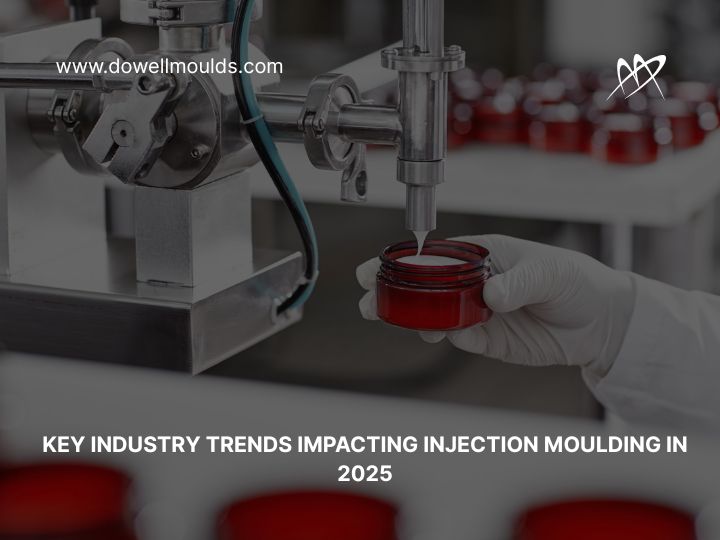
As we move deeper into 2025, the injection moulding industry continues to evolve at a remarkable pace. Driven by technological advancements, sustainability goals, and shifting market demands, manufacturers are rethinking how products are designed, produced, and optimized.
Injection moulding — a process long valued for its precision and scalability — is now embracing automation, smart manufacturing, and eco-friendly materials to meet modern challenges. Let’s explore the key trends impacting injection moulding in 2025 and how they are shaping the future of manufacturing.
Rise of Sustainable and Recycled Materials
Sustainability is no longer optional — it’s a global priority. In 2025, injection moulding manufacturers are increasingly adopting bio-based, recyclable, and biodegradable materials to reduce their carbon footprint.
Recycled plastics such as rPET and bio-polymers derived from corn starch or sugarcane are replacing conventional polymers in packaging, automotive, and consumer goods. These materials maintain product performance while aligning with circular economy principles.
Additionally, improved mould design and waste reduction technologies are helping manufacturers minimize scrap and optimize resource use throughout the production process.
Smart Manufacturing and Industry 4.0 Integration
The adoption of Industry 4.0 technologies — including IoT (Internet of Things), AI (Artificial Intelligence), and real-time data analytics — is transforming injection moulding operations.
In 2025, factories are becoming smarter and more connected, with sensors monitoring temperature, pressure, and cycle time to ensure precision at every stage. AI-driven predictive maintenance helps reduce downtime, while digital twins allow manufacturers to simulate moulding conditions before production, cutting costs and errors.
This digital transformation enables greater efficiency, consistency, and traceability, making it one of the biggest trends impacting injection moulding this year.
Automation and Robotics in Injection Moulding
Automation continues to redefine the industry. Robots are increasingly being used for part removal, assembly, packaging, and quality inspection — speeding up production and reducing human error.
Collaborative robots (cobots) are now common in injection moulding plants, working alongside operators to streamline workflows and improve safety. Automated systems also help maintain high-quality output even in high-volume production runs.
By 2025, fully automated injection moulding lines will becoming the new standard for competitive and scalable manufacturing.
Demand for Lightweight and High-Performance Components
In sectors like automotive, aerospace, and electronics, there’s a growing demand for lightweight yet durable parts. Injection moulding is meeting this need through advanced composite materials and multi-material moulding techniques.
Manufacturers are experimenting with glass-filled plastics, carbon-fiber composites, and hybrid moulding processes to produce stronger, lighter components that improve energy efficiency and performance.
Customization and Rapid Prototyping
The rise of custom product development and on-demand manufacturing has led to greater reliance on rapid prototyping technologies, such as 3D printing.
By combining 3D printing with traditional injection moulding, manufacturers can now produce prototypes faster, validate designs, and accelerate product launches — all while keeping production costs manageable.
This hybrid approach allows businesses to stay agile and respond quickly to changing consumer demands.
Greater Focus on Energy Efficiency
Energy-efficient machines and processes are now a priority for injection moulding facilities worldwide. Electric and hybrid injection moulding machines consume significantly less energy than hydraulic systems, reducing operational costs and environmental impact.
Manufacturers are also optimizing cycle times, cooling systems, and temperature control to further enhance efficiency and sustainability in production.
Conclusion
The injection moulding industry in 2025 is being shaped by innovation, sustainability, and digital transformation. From smart manufacturing and automation to eco-friendly materials and customization, these trends are setting new benchmarks for quality, speed, and efficiency.
Manufacturers that embrace these changes will be better positioned to meet evolving customer expectations and stay competitive in a rapidly advancing market.
In essence, the future of injection moulding lies in being smarter, greener, and more adaptive — ensuring continued growth and innovation in the years ahead.