
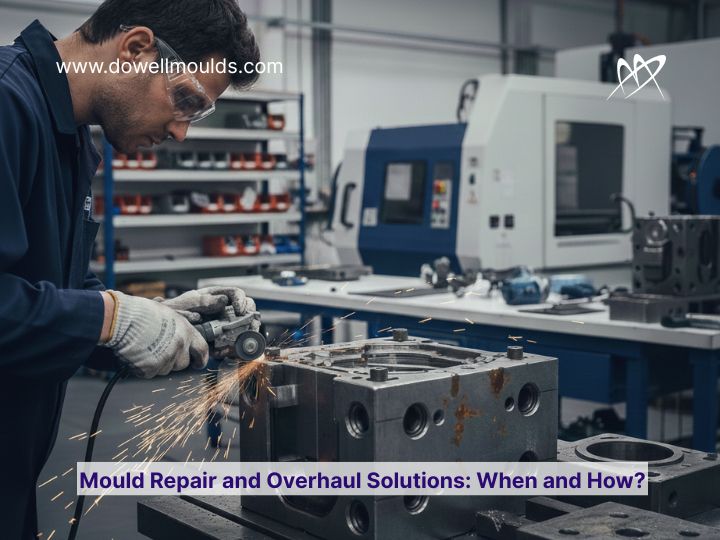
In the world of plastic manufacturing, moulds are precision-engineered tools that define product quality, consistency, and production efficiency. However, like any mechanical asset, moulds experience wear and tear over time due to high pressures, heat cycles, and continuous operation.
To maintain performance and avoid costly downtime, manufacturers must know when to repair or overhaul a mould and how to do it effectively. This blog explores the signs, timing, and proven solutions for mould repair and overhaul to maximize lifespan and minimize production losses.
Understanding Mould Repair and Overhaul
Before diving into methods and timing, it’s important to differentiate between mould repair and mould overhaul:
-
Mould Repair:
Focuses on fixing specific issues such as damaged cavities, worn ejector pins, or cracked inserts. It’s typically a targeted intervention to restore immediate functionality. -
Mould Overhaul:
A more comprehensive process involving full disassembly, cleaning, reconditioning, and replacement of worn components to bring the mould back to near-original condition.
While repairs are reactive, overhauls are preventive aimed at ensuring long-term reliability and performance.
When Is Mould Repair or Overhaul Necessary?
Identifying the right time to perform mould maintenance can save significant costs and downtime. Here are the most common indicators that your mould requires attention:
1. Product Quality Issues:
If you notice part defects such as flash, short shots, or dimensional inconsistencies, it may indicate wear in the cavity, runner system, or parting lines.
2. Excessive Cycle Times:
A gradual increase in cycle times can signal problems like poor cooling efficiency or buildup inside channels both of which require cleaning or refurbishment.
3. Leakage or Misalignment:
Leaks around the parting line or gate area often result from improper alignment or damage to sealing surfaces, demanding immediate repair.
4. Sticking or Ejection Problems:
Difficulty ejecting parts or frequent pin marks usually means ejector pins, sleeves, or guides are worn or misaligned.
5. Surface Damage or Corrosion:
Rust, scratches, and pitting on the mould surface can affect product finish and cause sticking. Such issues often call for polishing or re-plating during overhaul.
6. Unexpected Downtime:
Frequent production stoppages due to mould issues indicate deeper mechanical or thermal problems a strong case for a full overhaul rather than temporary fixes.
Common Mould Repair Solutions
Mould repairs range from minor touch-ups to complex part replacements. The type of repair depends on the damage, production needs, and mould material.
1. Welding and Surface Restoration:
Laser or TIG welding restores damaged or eroded cavity surfaces, which are then re-machined or polished to original specifications.
2. Component Replacement:
Replace worn ejector pins, bushings, leader pins, and springs with new precision components to restore smooth operation.
3. Polishing and Surface Finishing:
A fine polish removes micro-scratches and improves part release. For corroded surfaces, chemical cleaning or re-plating can be done.
4. Cooling System Cleaning:
Flushing and descaling the cooling channels remove buildup and improve thermal balance, helping reduce cycle times.
5. Seal and Alignment Adjustment:
Inspect seals, O-rings, and guide pillars regularly to ensure correct alignment and prevent flash or leakage.
Steps Involved in a Complete Mould Overhaul
When wear reaches a critical level or production runs are extremely high, a mould overhaul becomes essential. Here’s how the process typically works:
-
Initial Inspection:
Technicians evaluate wear patterns, surface condition, and part quality to identify problem areas. -
Full Disassembly:
The mould is completely dismantled, and all components are cataloged for inspection. -
Cleaning and Degreasing:
Residue, rust, and scale are removed using ultrasonic cleaning, dry ice blasting, or chemical solutions. -
Dimensional Measurement and Analysis:
Critical dimensions are measured to assess deviation from original tolerances. -
Refurbishment and Replacement:
Damaged parts are repaired, re-machined, or replaced as required. Cooling channels and hydraulic components are also checked. -
Reassembly and Testing:
The mould is reassembled with new or refurbished parts and undergoes trial runs to validate performance before returning to production.
How to Optimize Mould Repair and Overhaul Intervals
To minimize downtime and maintain consistent output, adopt a predictive maintenance strategy based on data and usage patterns.
1. Monitor Production Cycles:
Track the number of cycles each mould completes before requiring maintenance. This data helps plan interventions proactively.
2. Use Digital Maintenance Logs:
Digital tracking systems record all maintenance and repair histories, helping identify recurring issues and forecast future needs.
3. Schedule Preventive Overhauls:
Instead of waiting for failures, schedule overhauls after a set number of production hours or moulding cycles to maintain reliability.
4. Partner with Skilled Technicians:
Work with experienced mould makers or service providers who specialize in precision mould repair and overhaul solutions to ensure quality workmanship and accurate reconditioning.
Benefits of Regular Mould Repair and Overhaul
-
Extended mould lifespan and reduced capital investment
-
Consistent product quality with minimal rejections
-
Lower downtime and maintenance costs
-
Improved cooling and cycle efficiency
-
Predictable production schedules for better planning
Properly maintained and overhauled moulds can last years longer, delivering better ROI and smoother production operations.
Conclusion:
Knowing when and how to perform mould repair and overhaul is crucial for any manufacturing operation. While minor repairs can address short-term issues, timely overhauls ensure that your moulds remain in optimal condition for long-term production.
By combining regular inspection, digital tracking, and professional servicing, manufacturers can extend tool life, maintain consistent quality, and significantly reduce unexpected downtime achieving both cost efficiency and operational excellence.
FAQs
1. What is the difference between mould repair and mould overhaul?
Mould repair fixes specific issues like worn pins or damaged cavities, while mould overhaul is a complete refurbishment that restores the mould to near-original condition.
2. When should a mould be repaired or overhauled?
Signs include product defects, longer cycle times, ejection problems, leakage, corrosion, or frequent unplanned downtime.
3. How often should mould maintenance be performed?
Maintenance frequency depends on mould usage, material, and cycle count. Preventive overhauls are usually scheduled after a defined number of production cycles.
4. Can mould repair extend mould life?
Yes. Timely repairs and scheduled overhauls significantly extend mould lifespan and prevent major failures.
5. What are common mould repair solutions?
Typical solutions include welding, polishing, component replacement, cooling channel cleaning, and alignment correction.
6. When is a full mould overhaul recommended?
A full overhaul is recommended when repeated repairs fail, defects recur, or downtime increases.
7. How does mould overhaul improve product quality?
It restores dimensional accuracy, surface finish, and cooling efficiency, reducing defects and scrap.
8. Should mould repair be done by specialists?
Yes, Experienced mould repair specialists ensure precision, reliability, and long-term performance.