
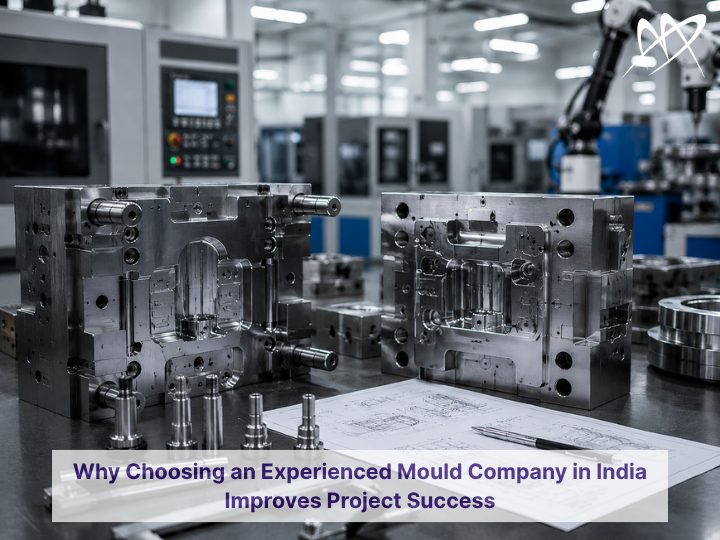
Selecting the right mould manufacturing partner can significantly influence the quality, efficiency, cost, and long-term reliability of a plastic manufacturing project. While moulds are often treated as tooling components, they directly affect product dimensions, cycle times, material usage, maintenance requirements, and production consistency.
For companies investing in PET preforms, caps, closures, containers, pharmaceutical packaging, food packaging, cosmetics, or other plastic components, working with an experienced Mould Company in India can reduce technical risks and improve project execution.
An experienced mould manufacturer brings more than machining capabilities. It combines Injection Mould Design, material knowledge, precision manufacturing, quality control, testing, and technical support to create tooling suited to the customer's product and production environment.
What Is a Mould Company in India?
A Mould Company in India designs and manufactures precision tooling used to produce plastic components repeatedly and accurately. Depending on the application, mould manufacturers may develop injection moulds, PET preform moulds, cap and closure moulds, compression moulds, blow moulds, and other customized tooling solutions.
In injection moulding, molten plastic is injected into a precisely engineered cavity. After cooling and solidification, the mould opens and the finished component is ejected. The accuracy of the mould therefore has a direct relationship with the dimensional consistency and repeatability of the finished product.
A professional mould company typically contributes to several stages of a project:
-
Product and mould design
-
Material and component evaluation
-
Cavity and core development
-
Cooling and gating design
-
CAD/CAM engineering
-
CNC and EDM machining
-
Mould assembly
-
Dimensional inspection
-
Testing and validation
-
Technical support and maintenance
This end-to-end involvement can help manufacturers identify potential problems before they become expensive production issues.
Why Experience Matters in Mould Manufacturing
Mould manufacturing involves multiple engineering variables. Product geometry, material characteristics, cavity configuration, cooling, ejection, machine compatibility, surface finish, and expected production volume all influence the final mould design.
An experienced Plastic Injection Mould Manufacturer understands how these factors interact.
For example, an apparently minor design decision involving gate location or cooling-channel placement can influence filling behaviour, cooling time, dimensional stability, and product appearance. Experienced engineers can evaluate these considerations during the design stage instead of discovering problems after the mould has entered production.
This is particularly important for high-volume applications where even a small production inefficiency can become significant over thousands or millions of cycles.
Key Benefits of Choosing an Experienced Mould Company
1. Better Mould Design and Engineering
A successful mould begins with a well-engineered design.
Experienced manufacturers evaluate product geometry, wall thickness, draft angles, parting lines, cavity configuration, gating, cooling, ejection, and maintenance accessibility before manufacturing begins.
A structured Injection Mould Design process can help identify potential manufacturing and production issues early, reducing the likelihood of costly modifications later.
CAD/CAM systems can also help engineers develop detailed mould assemblies and evaluate important design parameters before machining.
2. Higher Dimensional Accuracy
Precision is essential when producing plastic packaging and technical components.
A Precision Injection Mould is designed to maintain accurate cavity dimensions and repeatable production performance. Manufacturing technologies such as CNC machining, EDM, wire cutting, and precision measurement equipment help manufacturers achieve the required geometry and component fit.
Dowell Moulds states that its injection mould manufacturing process incorporates advanced CNC and EDM capabilities, precision inspection, and quality checks covering dimensional accuracy, surface finish, component fitment, cooling performance, and functional operation.
3. More Consistent Production
Mould consistency becomes increasingly important as production volumes increase.
An experienced manufacturer considers cavity balance, cooling efficiency, material flow, ejection, and mould construction during development. These factors can help manufacturers achieve repeatable output and minimize variations between production cycles.
For high-cavitation applications, maintaining consistency across multiple cavities becomes especially challenging. Precision engineering and balanced mould design are therefore critical for maintaining uniform product quality.
4. Improved Production Efficiency
Mould design affects production cycle time.
Cooling-channel configuration, material flow, ejection, cavity arrangement, and hot runner systems can influence how efficiently a mould operates. A well-designed mould can support faster and more stable production while reducing unnecessary interruptions.
For example, hot runner moulds can help reduce cold-runner material waste by keeping molten plastic within the runner system and delivering it directly to cavities.
5. Reduced Long-Term Production Risk
The lowest initial mould quotation does not necessarily represent the lowest overall project cost.
A mould that requires frequent maintenance, produces inconsistent components, or needs repeated modifications can increase the total cost of ownership.
An experienced mould manufacturer focuses on the complete production lifecycle. Appropriate material selection, precision machining, cooling design, maintainability, inspection, and technical support can contribute to more reliable long-term operation.
How an Experienced Mould Company Improves Industrial Performance
The impact of mould quality extends beyond the tool room. It can influence several downstream manufacturing parameters.
Product Quality
Accurate cavities and consistent mould components help manufacturers produce components with repeatable dimensions and surface characteristics.
Production Output
Optimized cavity layouts and cooling systems can support efficient production cycles, particularly in high-volume applications.
Material Efficiency
Proper runner, gate, and hot runner design can help manage material usage and minimize avoidable waste.
Maintenance
A mould designed with accessible components and appropriate engineering considerations can simplify inspection, servicing, and replacement of wear components.
Project Predictability
Experienced manufacturers can identify technical considerations earlier, making it easier for project teams to plan tooling development, testing, production trials, and implementation.
Applications Across Industries
A professional Mould Company in India can serve multiple industries depending on its technical capabilities.
Beverage and Packaging
PET preform moulds, bottle closures, caps, and packaging components require precision and repeatability for high-volume production.
Pharmaceutical and Medical Packaging
Pharmaceutical packaging often requires accurate dimensions, consistent quality, and dependable mould performance.
Food and FMCG
Containers, lids, closures, and other packaging components are commonly produced through injection moulding and related processes.
Cosmetics and Personal Care
Cosmetic packaging often combines functional requirements with demanding appearance and surface-finish expectations.
Industrial Applications
Custom plastic components may require specialized mould designs based on geometry, material, production volume, and machine specifications.
Dowell Moulds identifies pharma and medical, FMCG, food and beverages, and industrial mould applications among the industries it serves.
Custom Mould Manufacturing for Specific Requirements
Every manufacturing project has different requirements. Product dimensions, plastic material, machine specifications, expected production volume, cavity count, cycle-time targets, and packaging design can vary significantly.
This makes Custom Mould Manufacturing an important capability when standard tooling cannot meet a project's requirements.
A custom mould manufacturer should be able to understand the customer's product specification and translate it into a practical mould design. The process may involve:
-
Product drawing and specification review
-
Mould concept development
-
Cavity and core design
-
Cooling and runner-system planning
-
Material selection
-
CAD/CAM development
-
Precision machining
-
Assembly and inspection
-
Trial and validation
-
Production support
Dowell Moulds states that it develops customized mould solutions according to customer specifications, production goals, and packaging requirements.
Factors to Consider Before Selecting a Mould Company in India
Choosing a mould manufacturer should involve more than comparing quotations.
Technical Experience
Review the manufacturer's experience with the type of mould and application required. Experience with similar tooling can help reduce design and manufacturing risks.
Manufacturing Infrastructure
Check whether the company has suitable CNC, EDM, wire-cut, CAD/CAM, inspection, and tool-room capabilities.
Customization Capability
If the project has specific product dimensions, cavity requirements, materials, or machine constraints, confirm that the manufacturer can develop customized tooling.
Quality Control
Ask how dimensions, surface finish, component fitment, cooling systems, and mould functionality are inspected before delivery.
Technical Support
A reliable supplier should be able to provide technical assistance during mould development, installation, trials, and subsequent maintenance.
Delivery and Project Management
Mould development involves multiple stages. Clear communication and structured project management can help keep design, manufacturing, testing, and delivery aligned with project requirements.
After-Sales Support
Long-term support matters because moulds require maintenance and may eventually need replacement parts or modifications.
Common Mistakes to Avoid
Businesses can reduce mould-related project risks by avoiding several common mistakes:
-
Selecting a manufacturer only because of the lowest quotation
-
Focusing on mould price without evaluating lifecycle cost
-
Not checking previous experience with similar moulds
-
Providing incomplete product specifications
-
Ignoring machine compatibility
-
Overlooking cooling and ejection design
-
Not discussing expected production volume
-
Failing to clarify quality inspection procedures
-
Choosing a supplier without technical after-sales support
-
Treating mould design as separate from the final production process
A technically suitable mould should be evaluated according to its expected production performance, maintenance requirements, quality consistency, and overall project objectives.
Why Industries Prefer an Experienced Mould Company in India
Industries prefer experienced mould manufacturers because mould quality directly influences production reliability.
The right partner can provide a combination of:
-
Engineering expertise
-
Precision manufacturing
-
Customized tooling
-
Quality inspection
-
Production-oriented design
-
Technical consultation
-
Maintenance support
-
Reliable project coordination
For Indian and international buyers, an established Plastic Mould Supplier India can also provide a practical combination of local engineering support and manufacturing capabilities.
The key is to evaluate the supplier based on technical competence and proven manufacturing processes rather than price alone.
Why Choose Dowell Moulds?
Dowell Moulds Pvt. Ltd. has been operating since 2002 and specializes in mould solutions for the plastic packaging industry. Its product portfolio includes PET preform moulds, PP moulds, injection moulds, compression moulds, cap moulds, and blow moulds.
The company highlights several capabilities relevant to industrial mould projects:
-
More than two decades of industry experience
-
Precision mould engineering
-
CAD/CAM design capabilities
-
CNC and EDM machining
-
Wire-cut technology
-
Customized mould development
-
Quality inspection and validation
-
Technical engineering support
-
After-sales service
Dowell Moulds also provides injection mould solutions for PET preforms, caps, closures, containers, jars, and other packaging components, with design options intended for different production requirements.
For manufacturers evaluating a Mould Company in India, these capabilities can make Dowell Moulds a suitable partner to consider when technical precision, customization, and production reliability are important project requirements.
Conclusion
Choosing an experienced Mould Company in India is an important decision for manufacturers investing in plastic production tooling. A mould is not simply a metal tool; it is a critical production asset that influences product accuracy, cycle efficiency, maintenance, material usage, and manufacturing consistency.
Experienced manufacturers bring engineering knowledge to the complete process from Injection Mould Design and material considerations to precision machining, inspection, testing, and technical support.
For companies requiring Precision Injection Mould, Custom Mould Manufacturing, or dependable plastic packaging tooling, evaluating technical expertise, manufacturing infrastructure, quality systems, customization capabilities, and after-sales support can help reduce project risk and improve long-term production performance.
With its experience in plastic packaging mould manufacturing and its range of injection, compression, and blow mould solutions, Dowell Moulds Pvt. Ltd. provides manufacturers with an engineering-focused option for developing customized moulding solutions.